

Finding Hope in a Post-literate Society

Updated: Aug 10
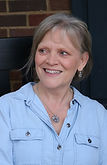
by Susan Koehler, Author and Educator
Break out the books and polish those pens: We’re on the fast track to becoming a post-literate society, and it’s up to us to reverse the course.
But first, let’s clarify that post-literate is not the same as illiterate. An illiterate society is one that lacks the ability to read; a post-literate society has the ability to read but chooses not to.
In a post-literate society, communication and entertainment are shared and consumed through visual images, videos, audio, and interactive digital media rather than through written text.
Ouch. Sound familiar?

The Warning Signs
Digital media has transformed the communication landscape. It’s heavy on visual stimuli and short on words. We've developed a pattern of communicating primarily through textual fragments, images, and short-form video.
We've leaned into this type of communication so heavily that we’ve allowed it to replace traditional means of communication and knowledge acquisition that require more effort, more thought, and more time. And now we are seeing the effects of that heavy leaning:
As documented by Pew Research Center, we are witnessing the decline of print media. Newspapers, journals, and magazines have been in a freefall as people overwhelmingly opt to get their news via digital media.
Our attention spans are shrinking, currently averaging only 8.25 seconds. (If you’re still reading at this point, congratulations on being above average.)
Our ability to analyze and evaluate the information we receive (media literacy) is becoming more important than ever. Yet, it’s not something broadly taught in our schools.
Reading proficiency is in crisis. Despite a slight bump among fourth graders recently, National Assessment of Educational Progress (NAEP) scores have been on a downward trend for ten years.
According to that same NAEP report, only about a third of fourth graders surveyed said they read for pleasure. Among eighth graders, the number dropped to 14%. This trend is confirmed by book sales, especially the infamous “middle grade slump.”
The National Endowment for the Arts reports that fewer than half of the adults surveyed had read a single book in the previous year, which is part of another trend that keeps moving downward.
The cover story for the August 2026 issue of The Atlantic is an alarming article by
Rose Horowitch called “The End of Reading is Here.” She provides a convincing, evidence-rich summary that should serve as a wake-up call to Americans.

This echoes Horowitch’s 2024 article about a disturbing trend among college students. Many lacked the stamina to read entire texts, complained when they were required to do so, and struggled with sustaining attention and building comprehension.
A Culture of Contention
With such clear warning signs, you would think we’d be doing all we could to promote books. However, conservative gatekeepers continually strive to control the gates for everyone.
Librarians have been threatened with lawsuits and violence. If you haven’t seen The Librarians, go watch it. This award-winning documentary is a startling wake-up call that exposes the extremism of those who seek to control our access to books.

Book challenges and book bans have stigmatized books. Classroom libraries and class read-alouds are becoming less common. There are book bans across many US states, and multiple federal book ban bills are currently being considered by Congress, prompting the American Library Association (ALA) to issue an action alert.
So, what are students currently reading in school if they’re not reading actual books? They’re reading excerpts, missing the full context of books and the many facets of a narrative that work together to create meaning.
The old “use it or lose it” adage rings true. And in choosing not to sit and read and think and evaluate, we are losing our ability to think critically, solve problems creatively, and construct meaning from extended texts.
It sounds kind of hopeless, right? But hope is not lost.
The Summer of Hope
I began the summer feeling very glass-half-empty about the future of reading. But then I looked up, and I saw a lot of reasons to be hopeful.
The Irma Rangel Library! At the close of the 2025-2026 school year, Spectrum News reported that the Dallas Independent School District’s Irma Rangel Library saw a 42% increase in library checkouts. What was the catalyst? The district banned access to cell phones during the school day. (Across the entire district, checkouts rose by 21%.) Students reported that they felt less distracted and found pleasure in reading physical books.
Book Clubs! Early this summer, Book Riot published “Here’s What the Biggest and Most Interesting Book Clubs are Reading in 2026.” Have you noticed that book clubs are on the rise? In addition to traditional book clubs, there are silent book clubs, celebrity book clubs, virtual book clubs, and genre book clubs. And it’s really great to know that young adults are a big part of the surge. According to inc.com, book clubs are up 21% among Gen Z and 29% among Millenials.
GLWI! In June, I was honored to be a presenter at the Glazer & Lorton Writing Institute. A joint venture of the University of Miami and Miami-Dade Public Schools, GLWI is a two-week intensive experience where teachers become writers. In the process of developing their craft as writers, they powerfully amplify their craft as teachers of writing. Spanning the K-12 spectrum, I met teachers who were invested, motivated, and passionate about sharing what they learned with their students. As a new school year begins, their impact will be felt exponentially.
Books on the Bus! Okay, it was one book, but it made my heart soar. I saw a picture of kids on their way to summer camp. The bus ride would take a few hours, and one of the kids took a book along for the ride. There he was, hardcover spread open, soaking in a story with bus-ride shenanigans going on all around him.
Independent Bookstores! In July, I read an article in The Book Trib Brief entitled “Reading Isn’t Dead. Stop Writing Its Obituary.” According to Book Trib, the number of independent bookstores is increasing across the United States. Indie bookstores offer programming designed to engage people with books. They have real people who make real recommendations.

The Library Dads! In late July, the Good News Network published a story about Khari Arnold, an Atlanta dad who turned his joyful habit of taking his daughter to the library into a community experience. Now, there's an entire group following his lead. They’re called the Library Dads, and Khari defines their mission this way: “Bonding through books and building brotherhood.”
Hand Claps! I spent a few days at theme parks with my grandchildren. We rode some really fun rides, but we also stood in some really long lines. Guess what a lot of kids do when they’re standing in a boring line? Hand claps! I was gratified to learn that kids still know rhythmic verses like Miss Merry Mack, Miss Lucy, and Lemonade. What do hand claps have to do with reading? Well, the rhythmic language builds fluency, the multi-sensory activity lights up the brain, and the act of crossing the midline actually builds a foundation for reading.
What Can We Do?
We don’t have to storm the castle of digital media. We don’t need to eliminate the benefits of visual images, videos, audio, and interactive digital media. We just need to be intentional about reserving time and space for the written word.
I’ve started our to-do list. Check off each item as it’s completed, and you’ll be well on your way to steering us away from this post-literate catastrophe. With simple steps, we can all be heroes.
Steps to Saving the World (or at least the literacy part of it):
⏹️ Sit down and read a book.
⏹️ Sit down and read a book to a child.
⏹️ Start a book club. Need some guidance? Click here.
⏹️ Visit your local library. (Thank a librarian while you’re there.)
⏹️ Become a patron of a local independent bookstore.
⏹️ Create a space in your home for reading.
⏹️ Create space in your schedule for reading. (And take a break from devices.)
⏹️ Teach a child a hand clap. Need a refresher? Click here.
⏹️ Keep books in the car for wait times.
⏹️ Read a book that the book challengers don’t want you to read. Here’s a list.
⏹️ Read a kids’ book that book challengers don’t want you to read. Here’s a list.
⏹️ Subscribe to your local newspaper and read it.
⏹️ Follow a recipe with a child.
⏹️ Share a recipe with a friend on a handwritten recipe card.
⏹️ Buy some nice stationery and write a letter (by hand!).

The bad news is that we are truly losing our ability to focus, evaluate, build empathy, and think critically. We have to take action to avoid post-literacy.
The good news is that we don’t have to fight or complain or go on the attack. We just need to read. And write. And talk about books. And share books. And play. And teach kids to do all those things.
The problem is real. But the solution is filled with joy. Let's get started.


Susan, this topic has been on my heart and mind so, so, so much. Thank you for the very carefully laid out points and links provided. I will be sharing this on my substack. Are you on substack? I'd love to "re-stack" this. I will definitely, point to you as the source so that others can find it.